The programme
From wild egg to open water, in ninety days
It starts at our FADs and ends with a release the whole island is invited to watch — and every stage in between is counted, monitored and published.
For food
·
For livelihoods
·
For sustainability
What we do
Four stages, out in the open
01
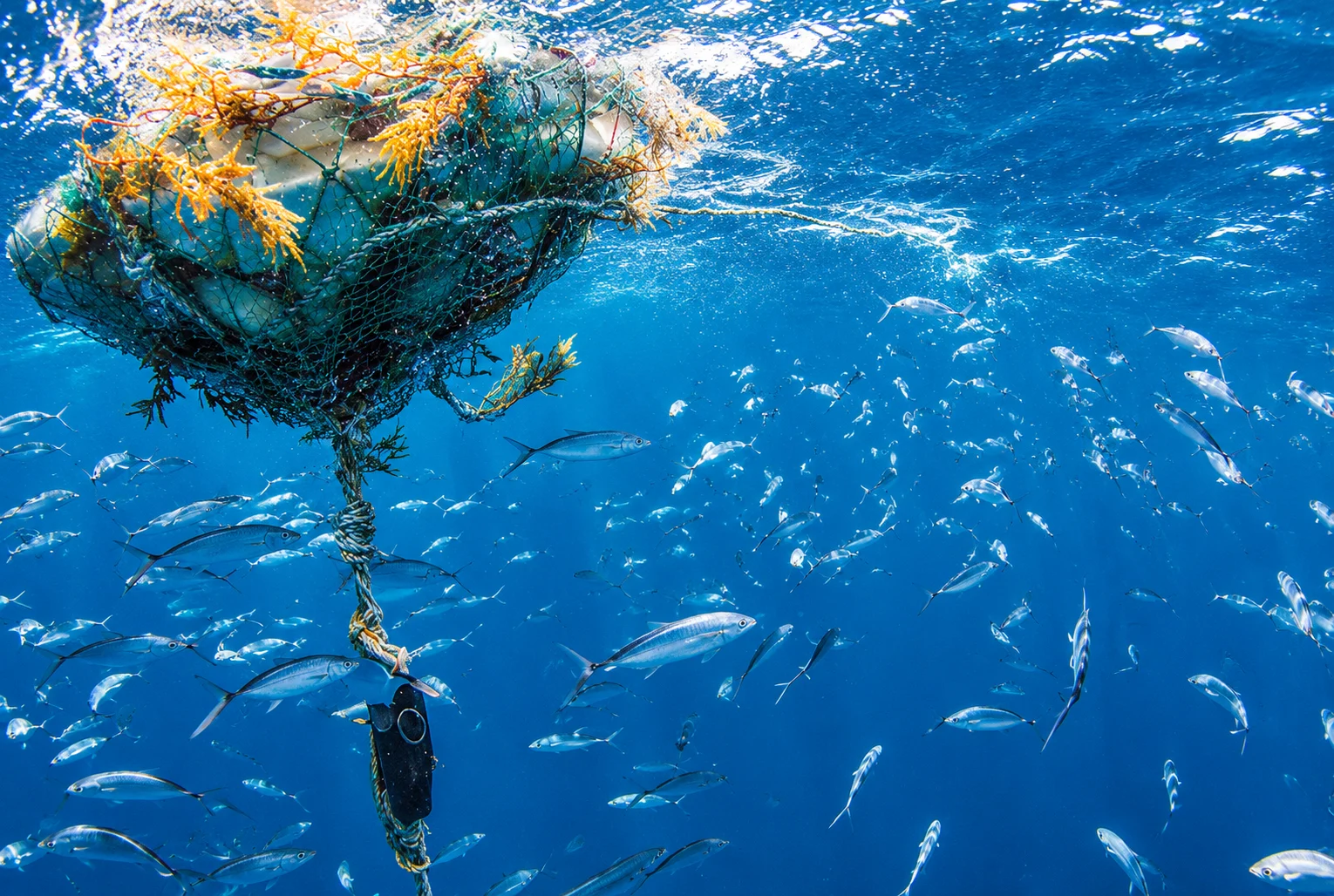
It starts at the FADs
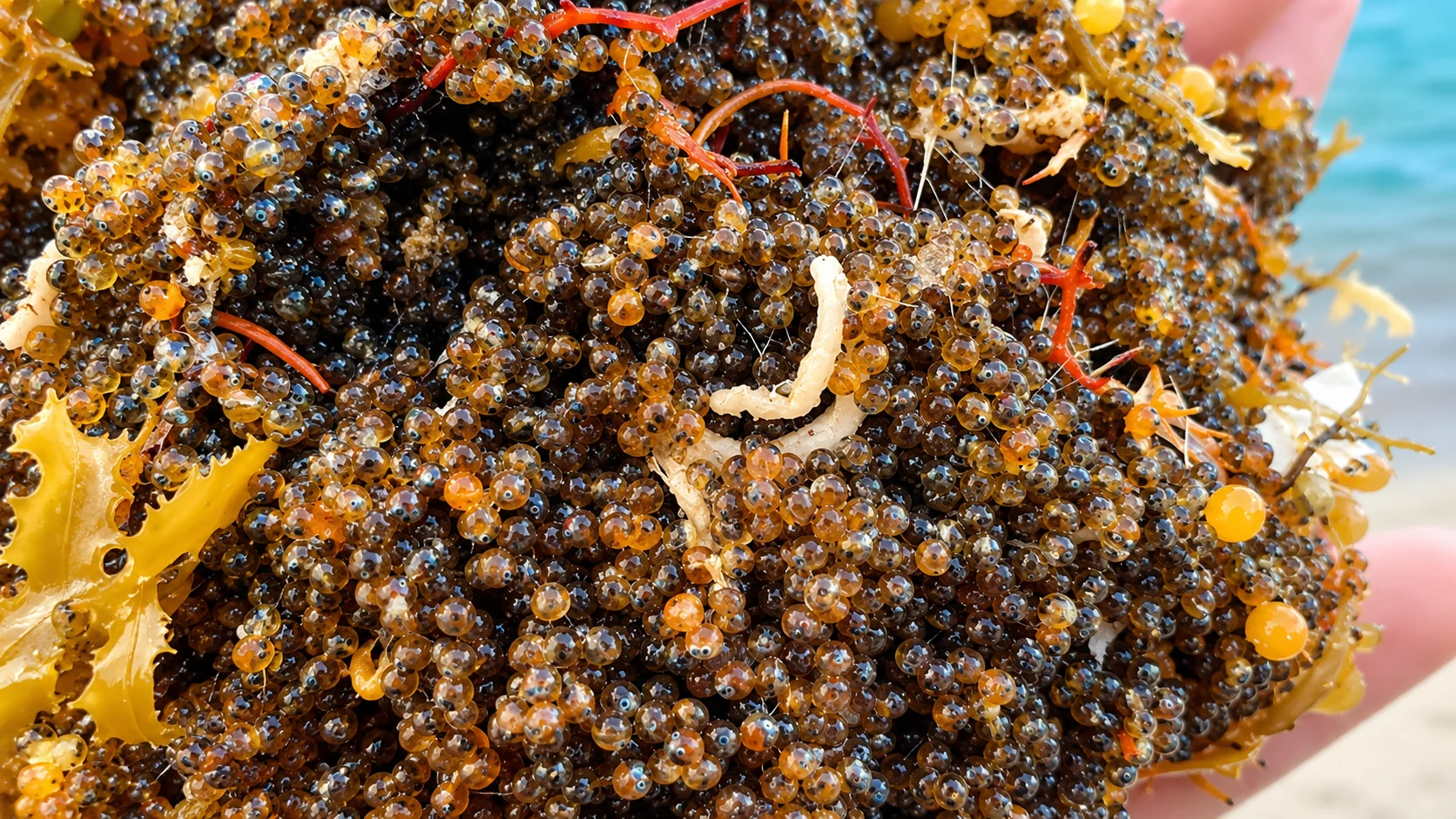
Registered fisherfolk collect wild egg masses from the FFINS FAD network — devices engineered for exactly this — and are paid a fair, published rate for every bucket.
02
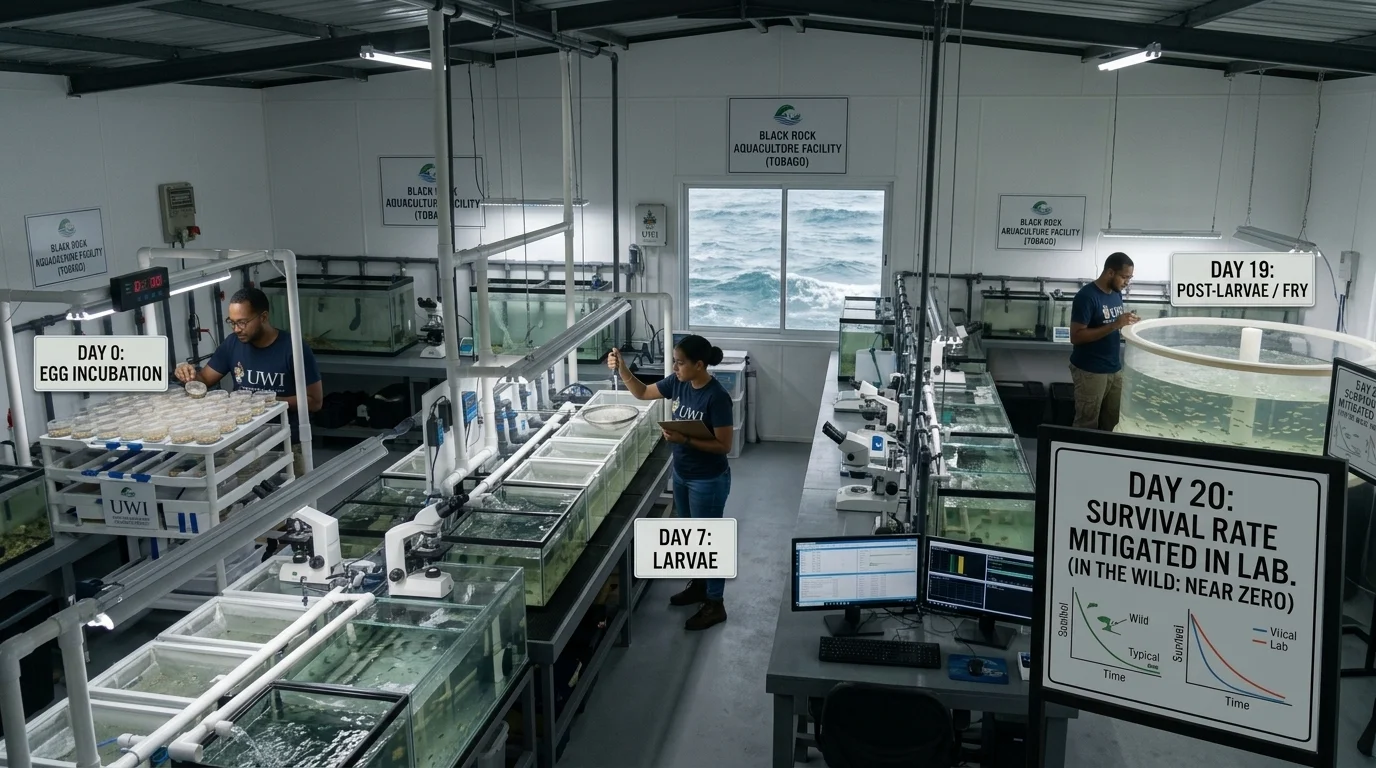
The lab, day 0–20
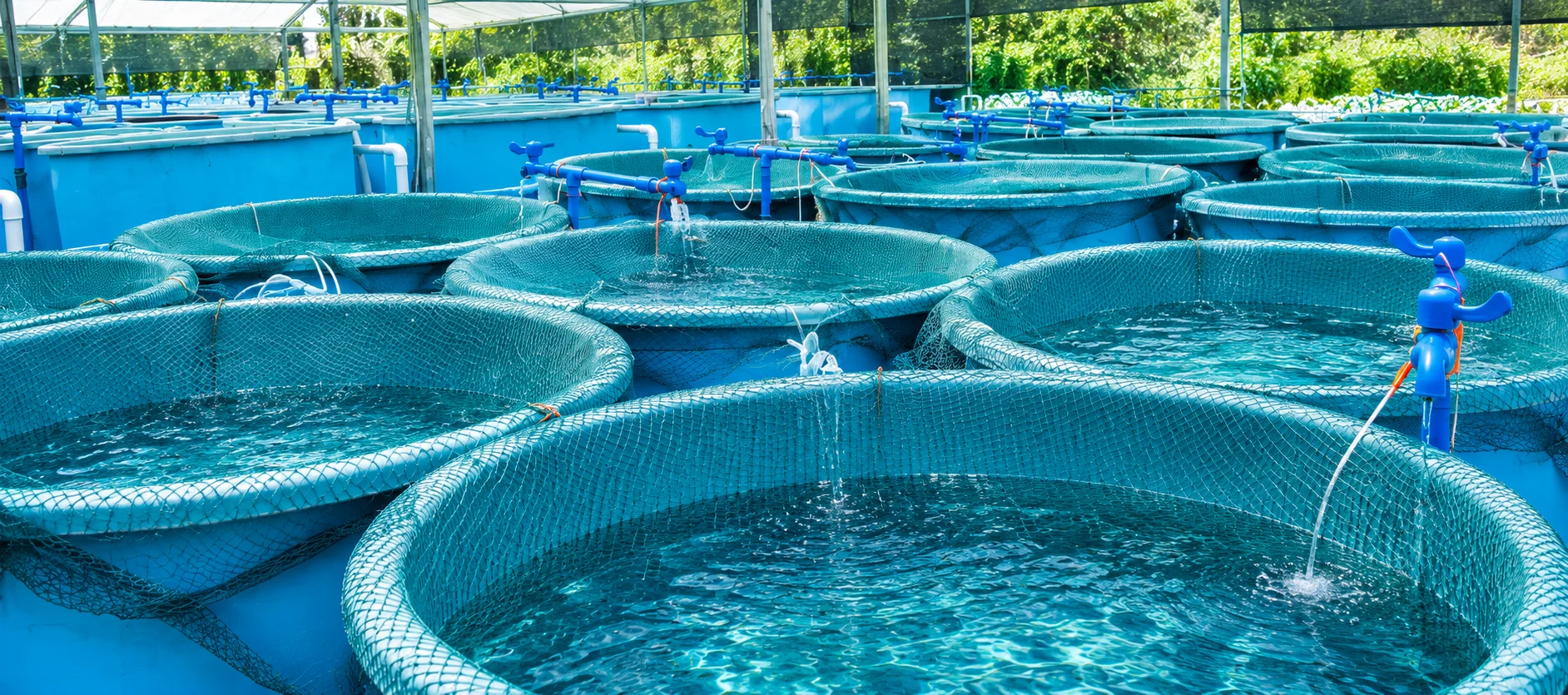
At Black Rock, eggs hatch and larvae are carried through the weeks where survival in the wild is near zero.
03
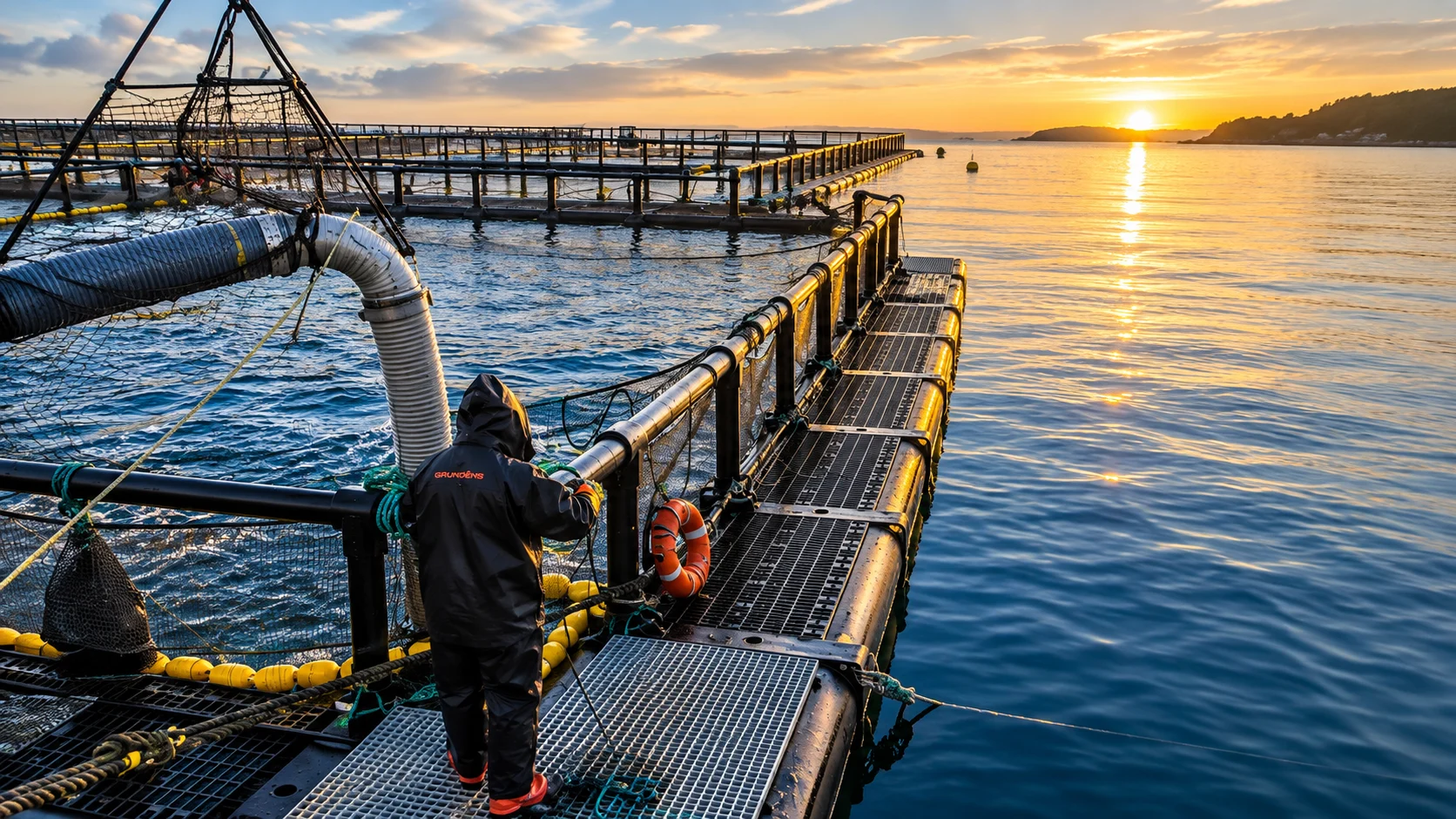
Sea pens, day 20–90
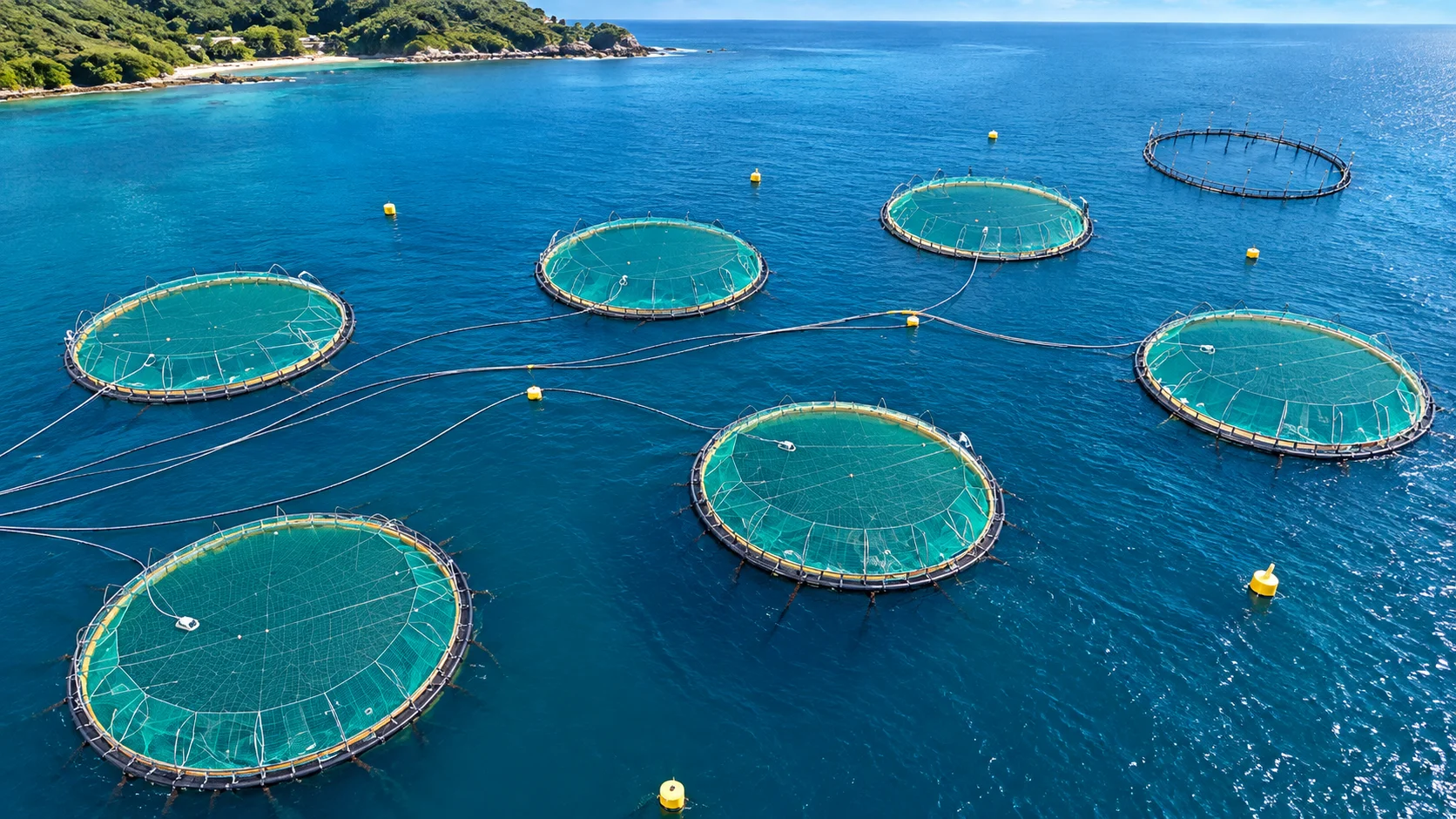
Juveniles grow out in community-kept pens — real sea, real tides, still protected.
04
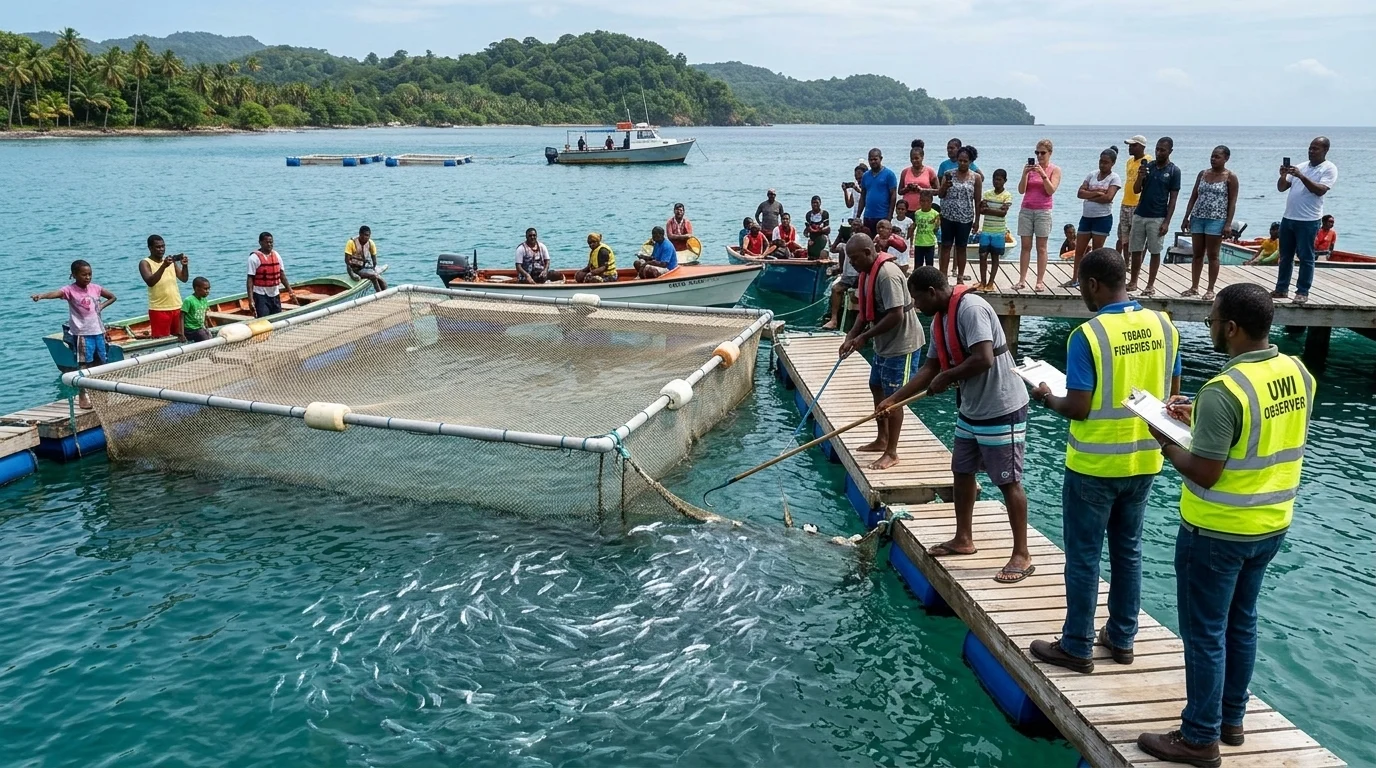
Day 90 — a public release
Every release is counted, independently witnessed, published the same day — and the public is invited to be there.

Why now
The window is open, and it is narrow. Every year of delay makes recovery harder and more expensive.
The FFINS FAD network
Engineered for the mission
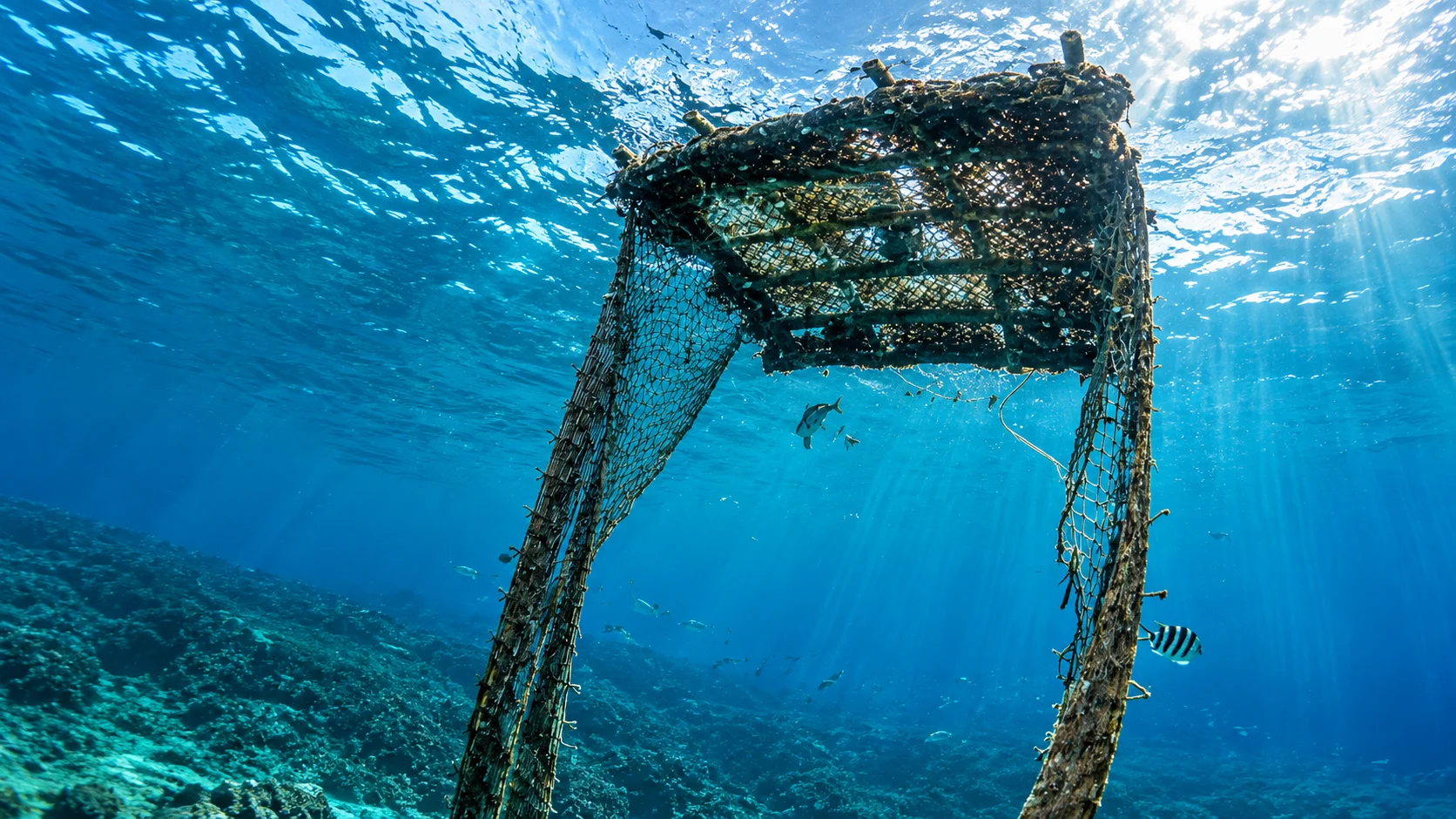
A standard FAD gathers fish for the catch. Ours are designed and architected to do more: purpose-built spawning substrate where flying fish lay, collection points fisherfolk can work safely, and mounting for the instruments that monitor the water around them.
The full engineering stays in-house. What the network produces — egg collections, condition, station status — is on the public record.
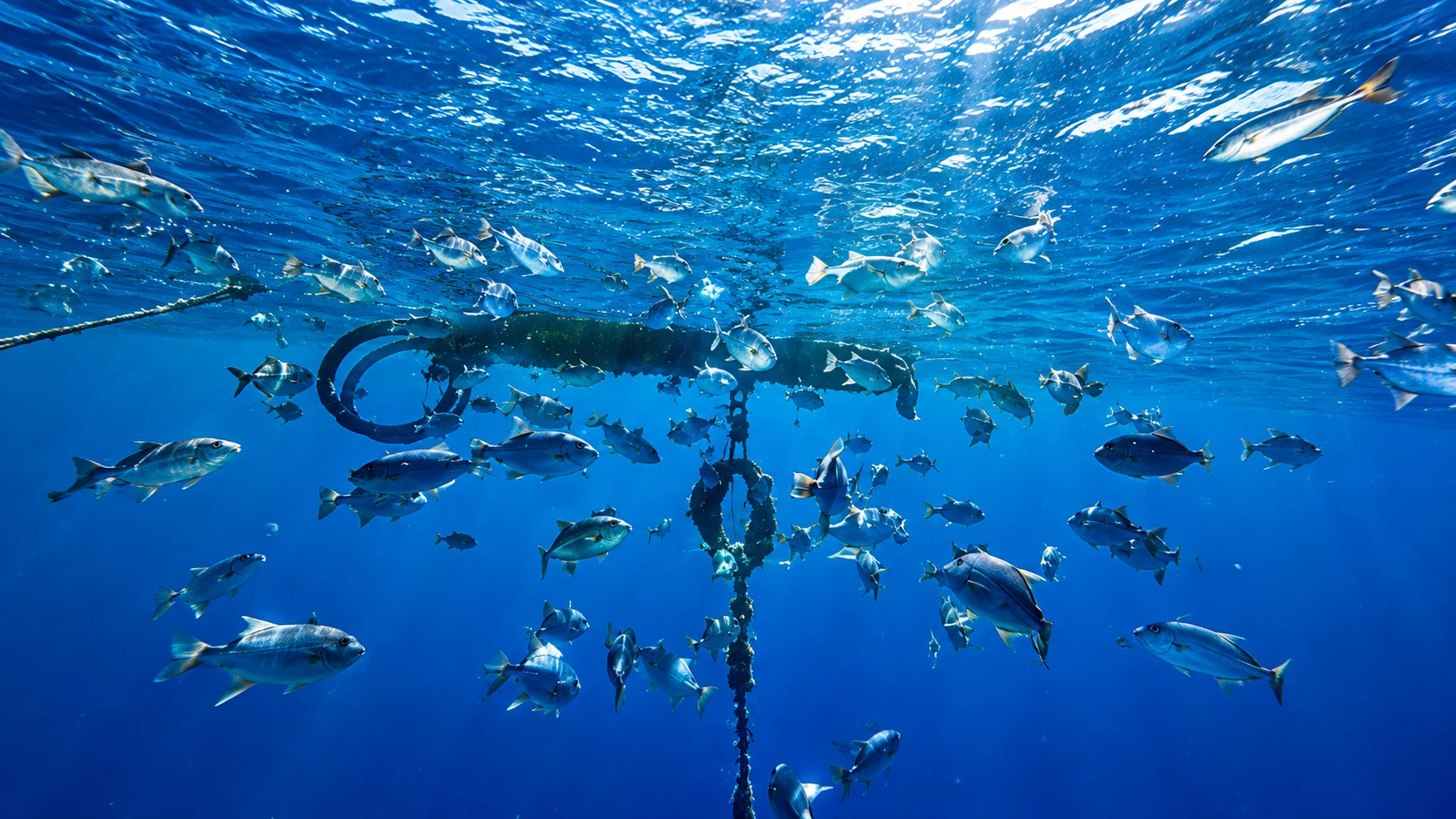
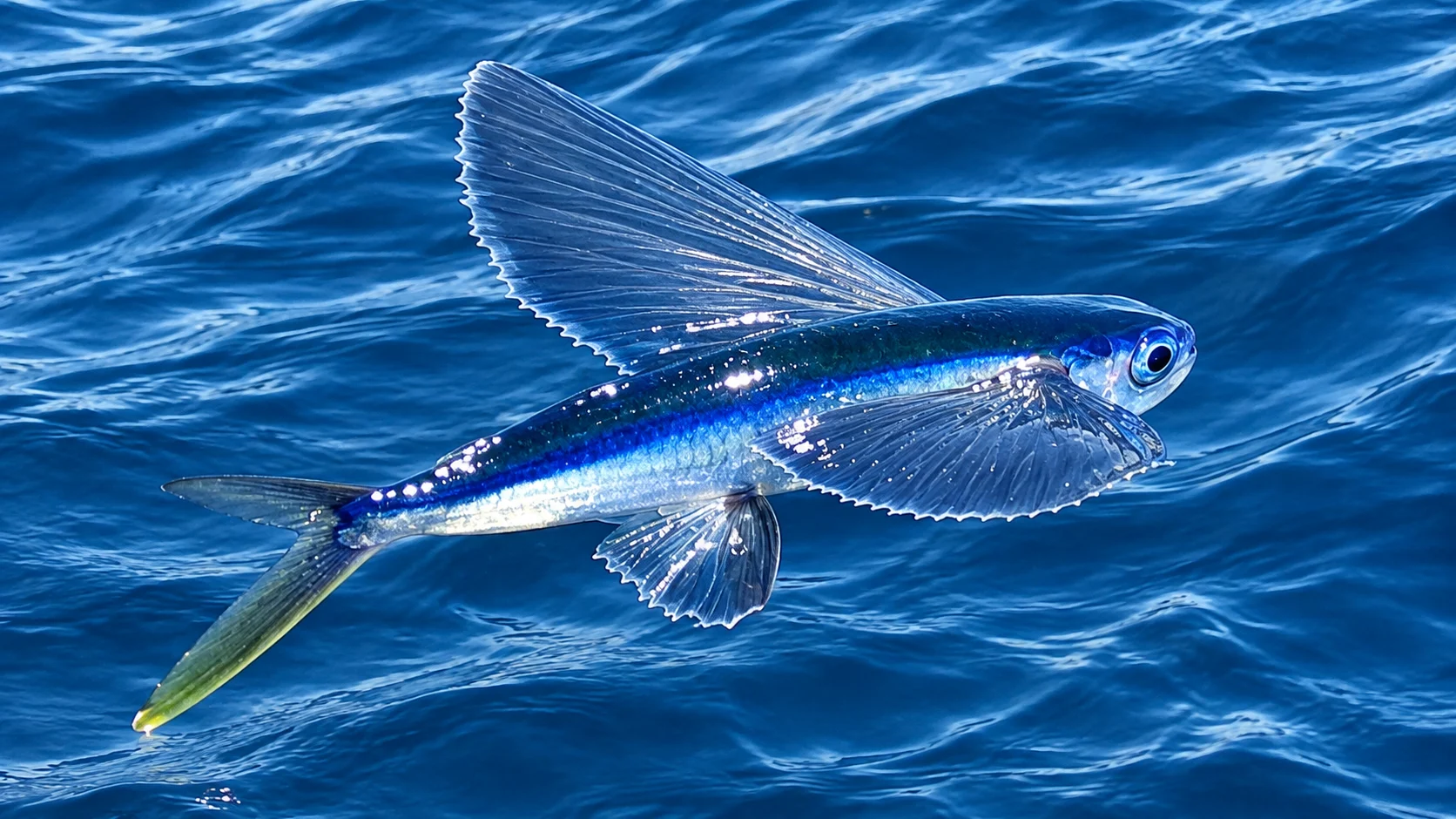
In nature, 97 of every 100 flying fish eggs are lost. We aim to bring 30 to 60 through.
The biology sets the rules · every fish we release began as a wild egg

The fisherfolk
The programme starts with the fisher — so does the benefit
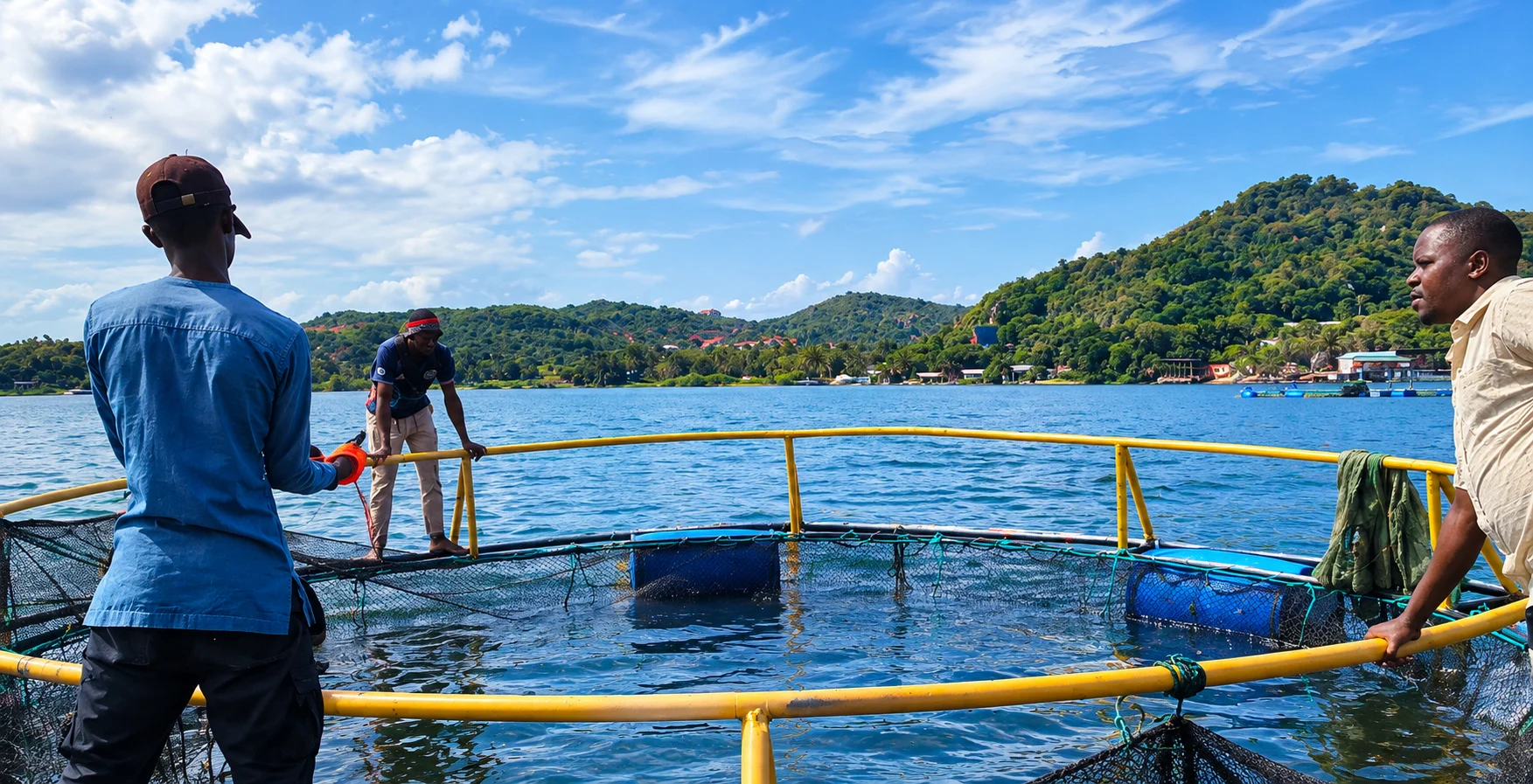
Egg masses a fisher would otherwise throw back are bought on the spot, at a fair, published rate with a guaranteed monthly minimum — income that reaches fishing households from the first month, on their own boats, with no investment asked.
The payment is only the start. Every registered fisher joins the Fishermen’s Benefit Register — and the register looks after the family, not just the fisher.
Paid egg collection
Cash on delivery for every bucket, every time, with a guaranteed monthly minimum for active collectors. No fees, no paperwork burden, no change to how you fish.
Pen-keeping jobs, family first
Paid weekly work checking the grow-out pens each morning. First preference goes to the immediate family of registered collectors, and FFINS provides the training.
A free GPS logger that gives back
Every registered fisher carries a free GPS activity logger. The tracks build the heat map — and it flows back as hotspot guidance: find fish faster, burn less fuel.
Nets and safety gear
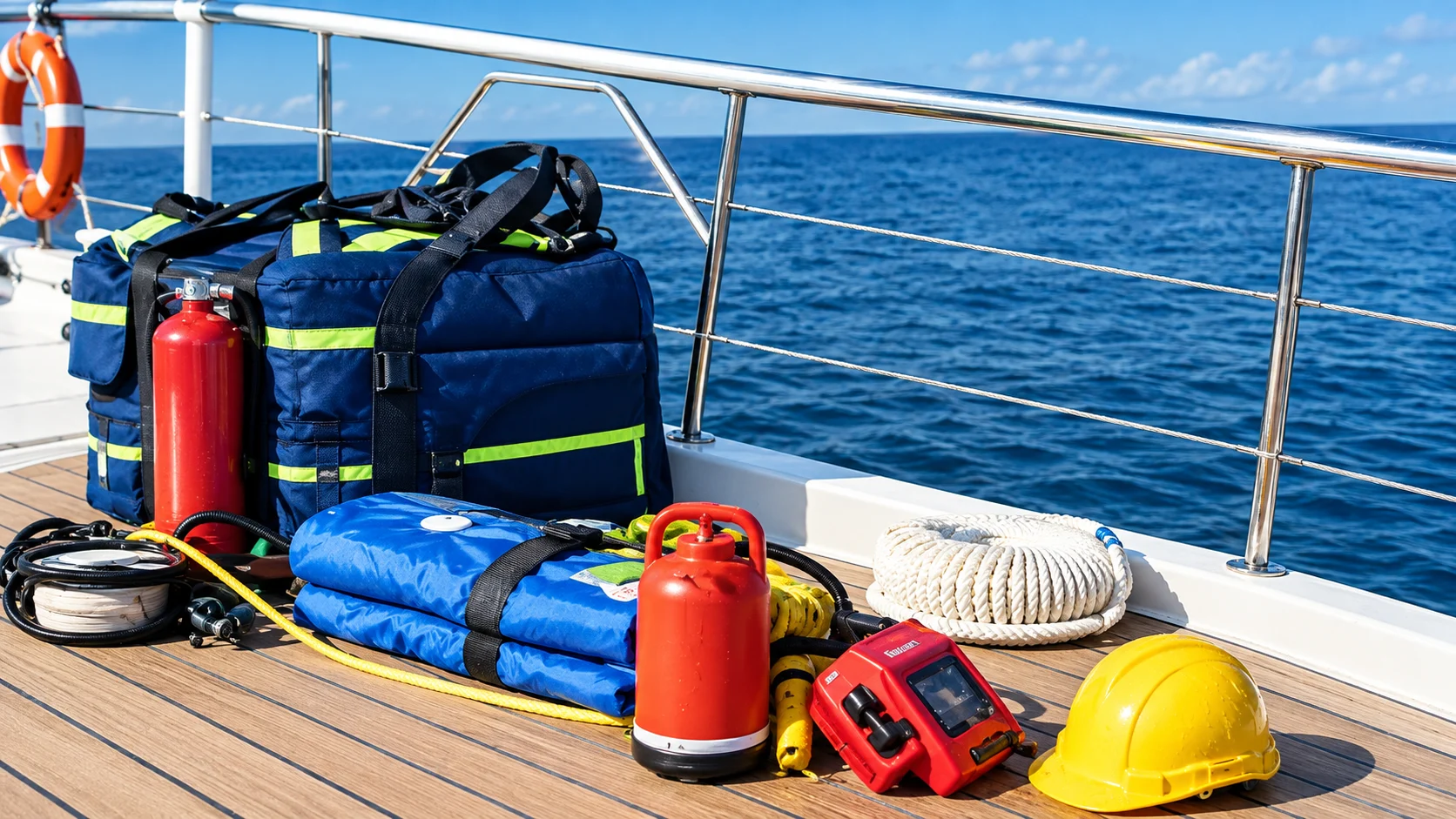
Species-specific flying fish nets for active collectors, plus life vests, ropes, rings and lanterns. No FFINS fisher goes out without proper safety gear.
Health & accident insurance
Group accident and injury cover for registered fishers is being secured now — so one bad day at sea does not take the household down with it.
Eyecare & back-to-school
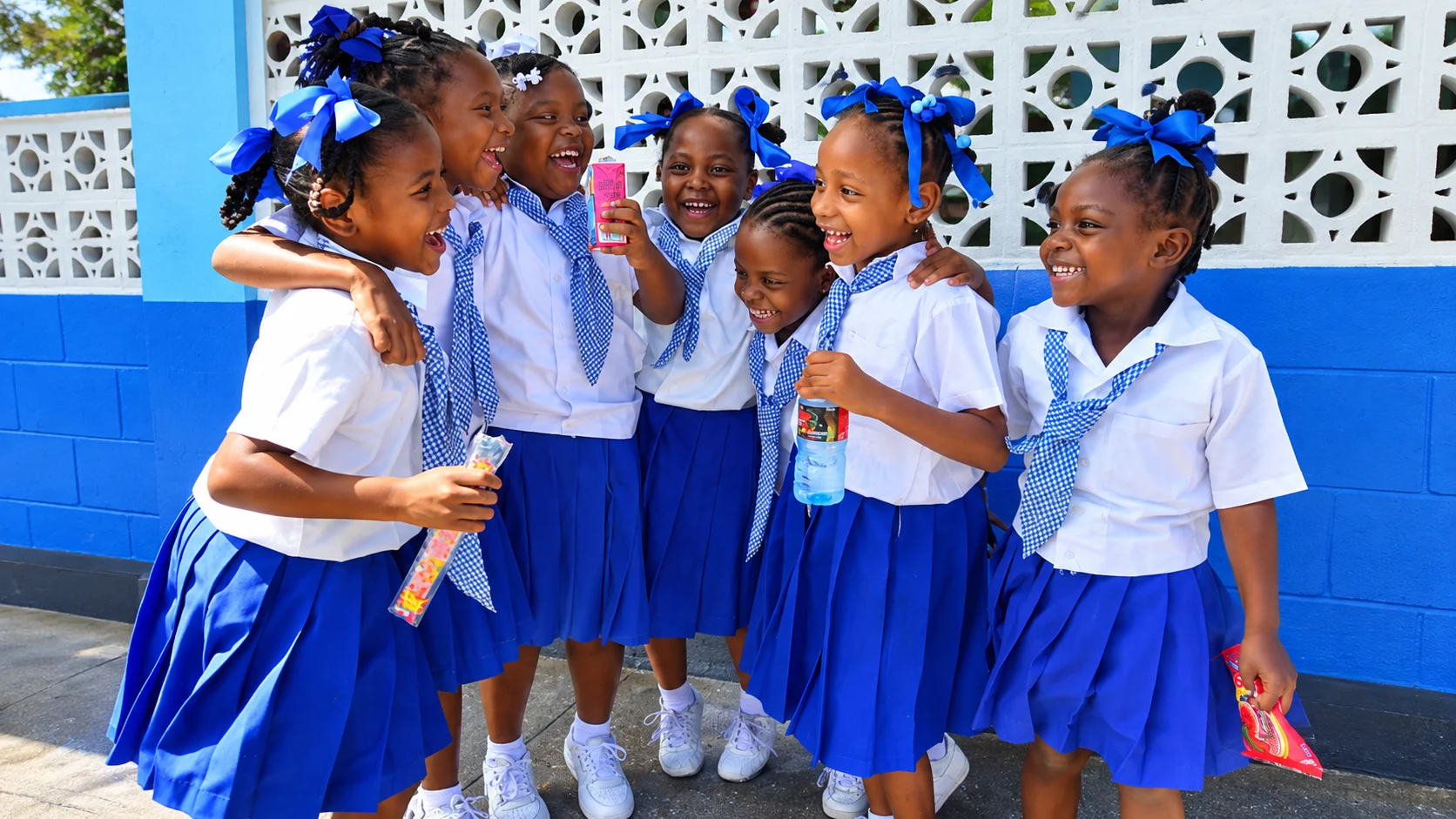
An optometrist plan for years of sun and salt on the eyes, and uniform assistance for the children of registered households when the new term starts.

From the landing to the lab
A bucket handed over at the landing is in the lab within hours. That is where the ninety days begin.
Day 0–20 · The lab
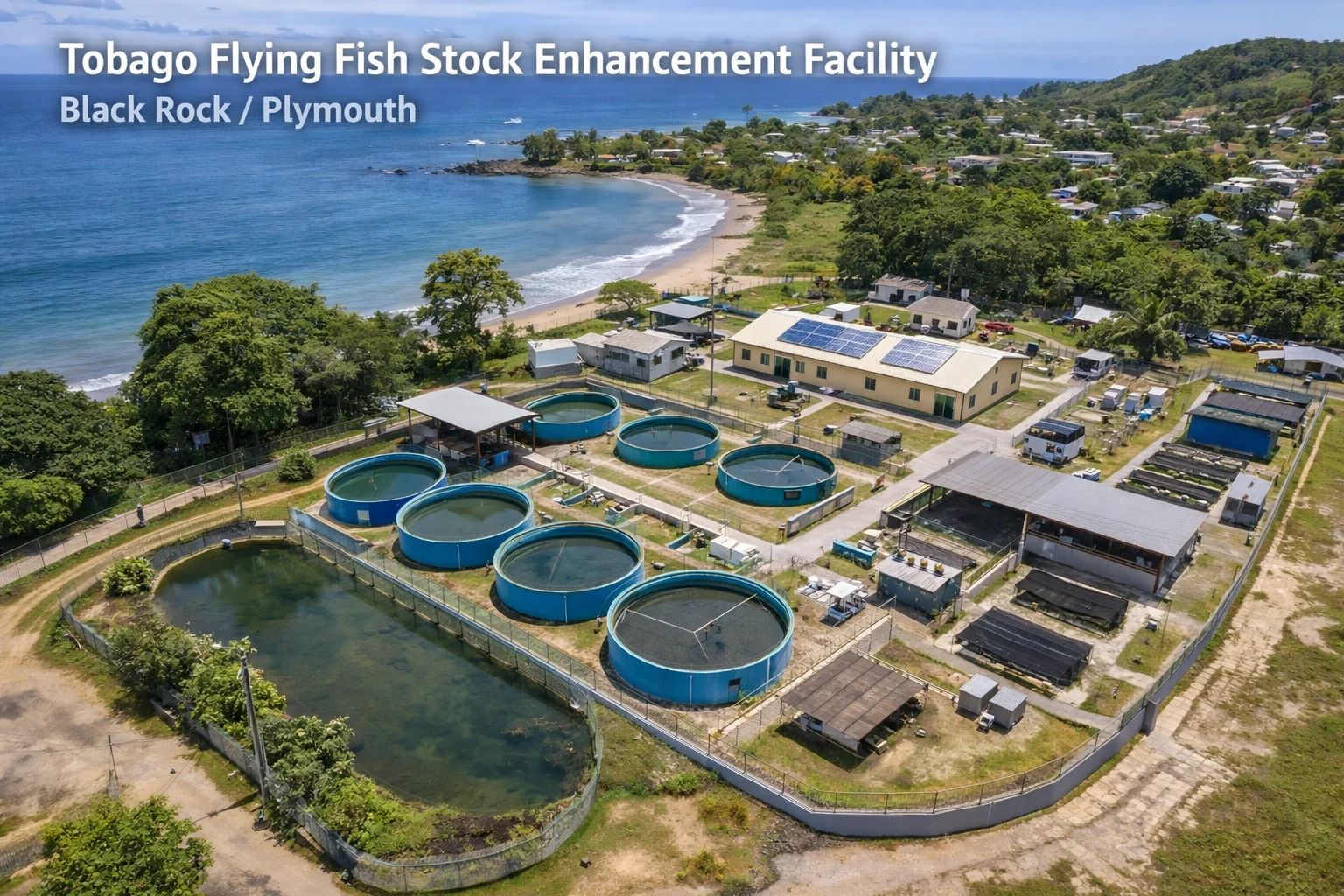
Purpose-built at Black Rock
Eggs hatch and larvae are raised in the lab on the Plymouth coast for their first twenty days — the stage where survival in the wild is near zero and every hour of care counts.
How we do it is our craft, and it stays in-house. That we do it — cohort by cohort, with survival recorded at every stage — is on the public record. The same science team that runs the rearing protocol here also leads the release counts at day ninety, so the people who raise each cohort are the ones who report on it.
By day 20 they are strong enough for the sea. By day 90 the sea is theirs.
The countdown
Ninety days
Then the sea takes over, gently
Day 0
Transfer to the sea pens
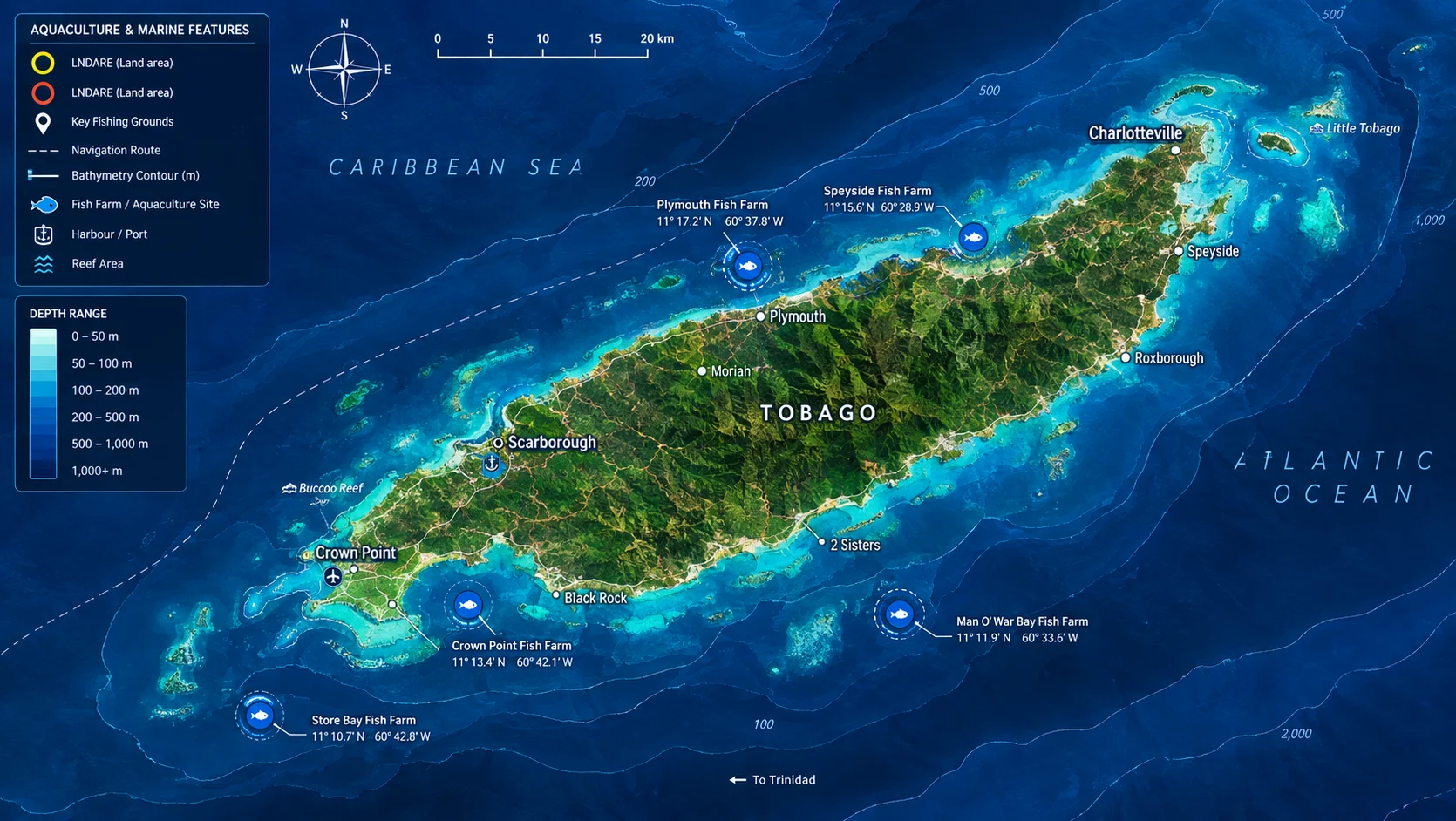
Juveniles move from the lab to pens in Tobago waters, kept by trained community pen keepers — real sea and real tides, still protected from predation.
Day 20 · Transfer
Day 90 · Release
Day 20–90 · The science
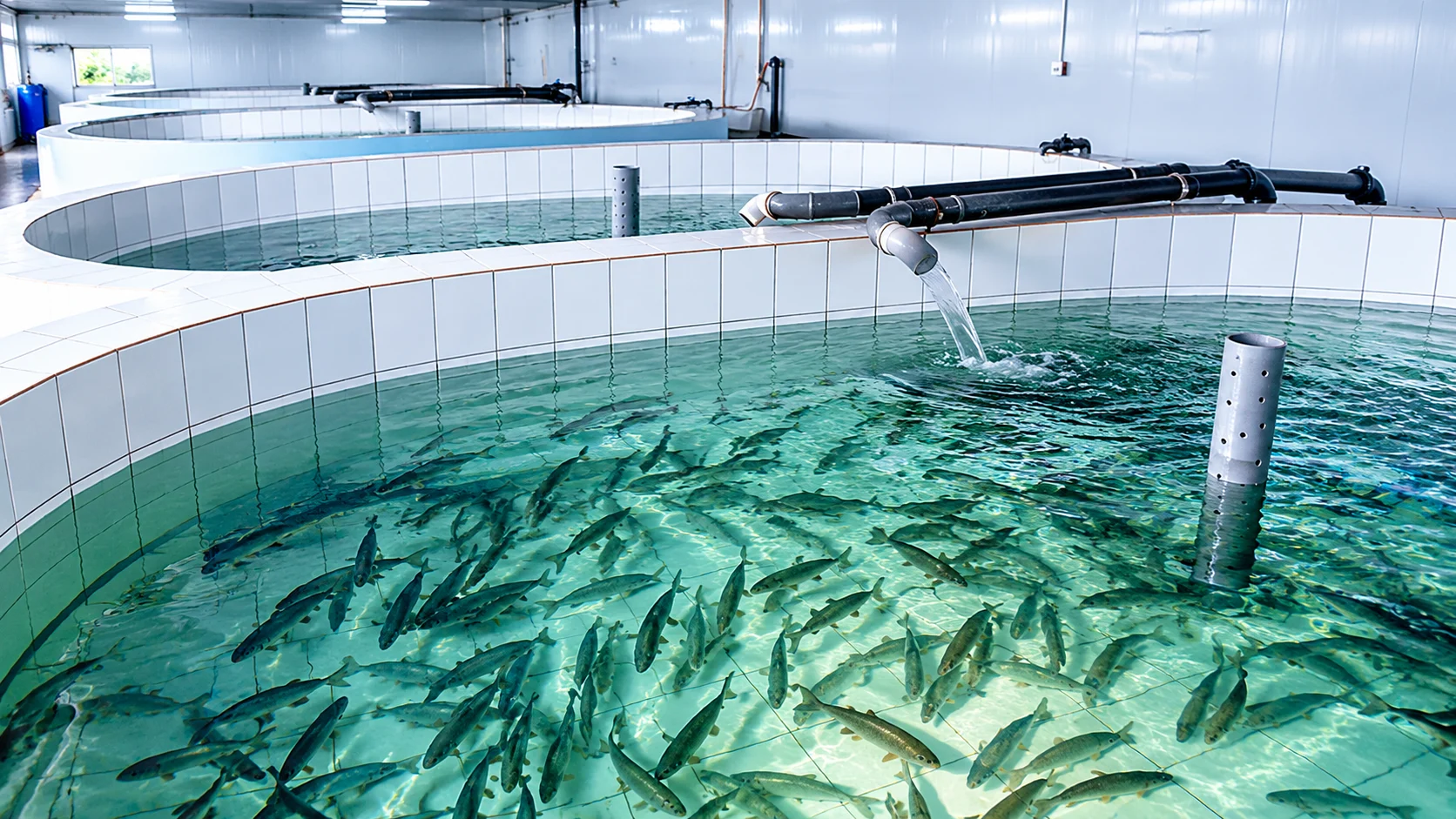
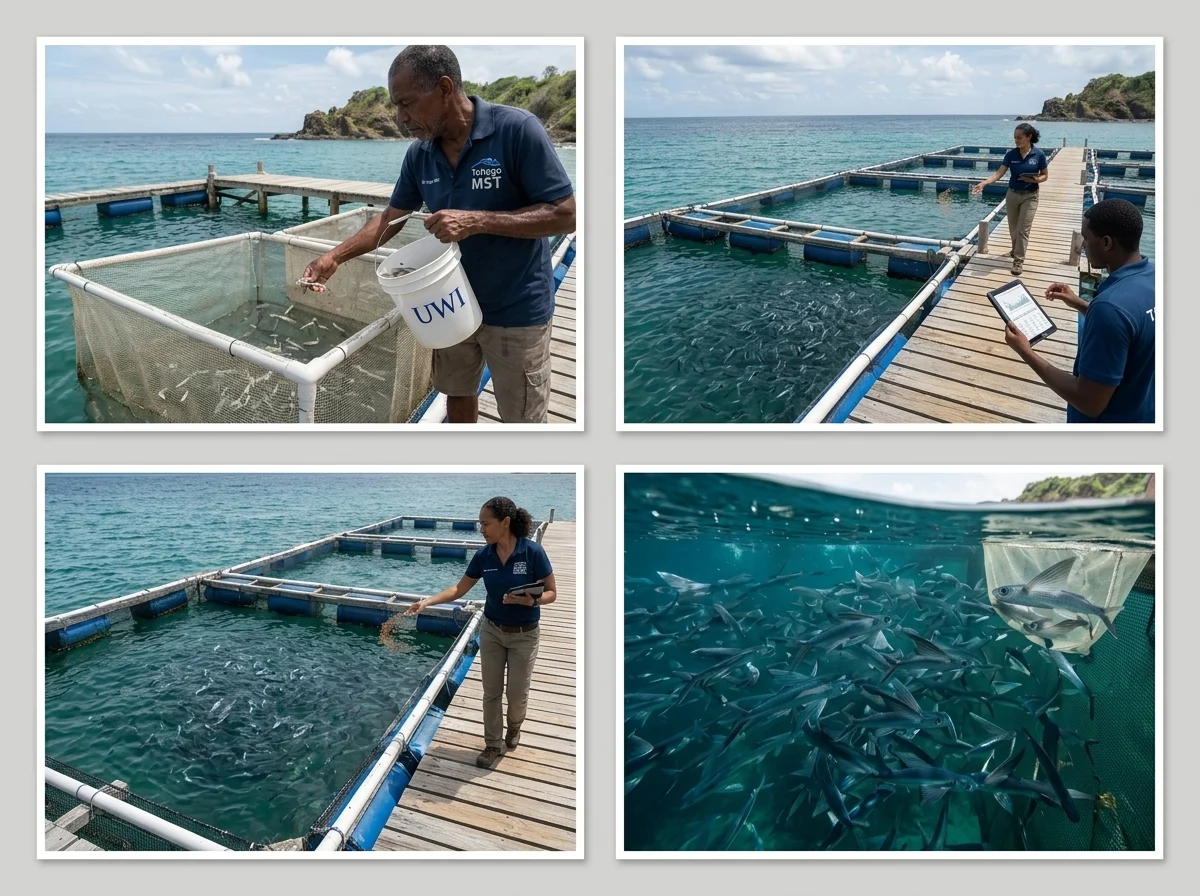
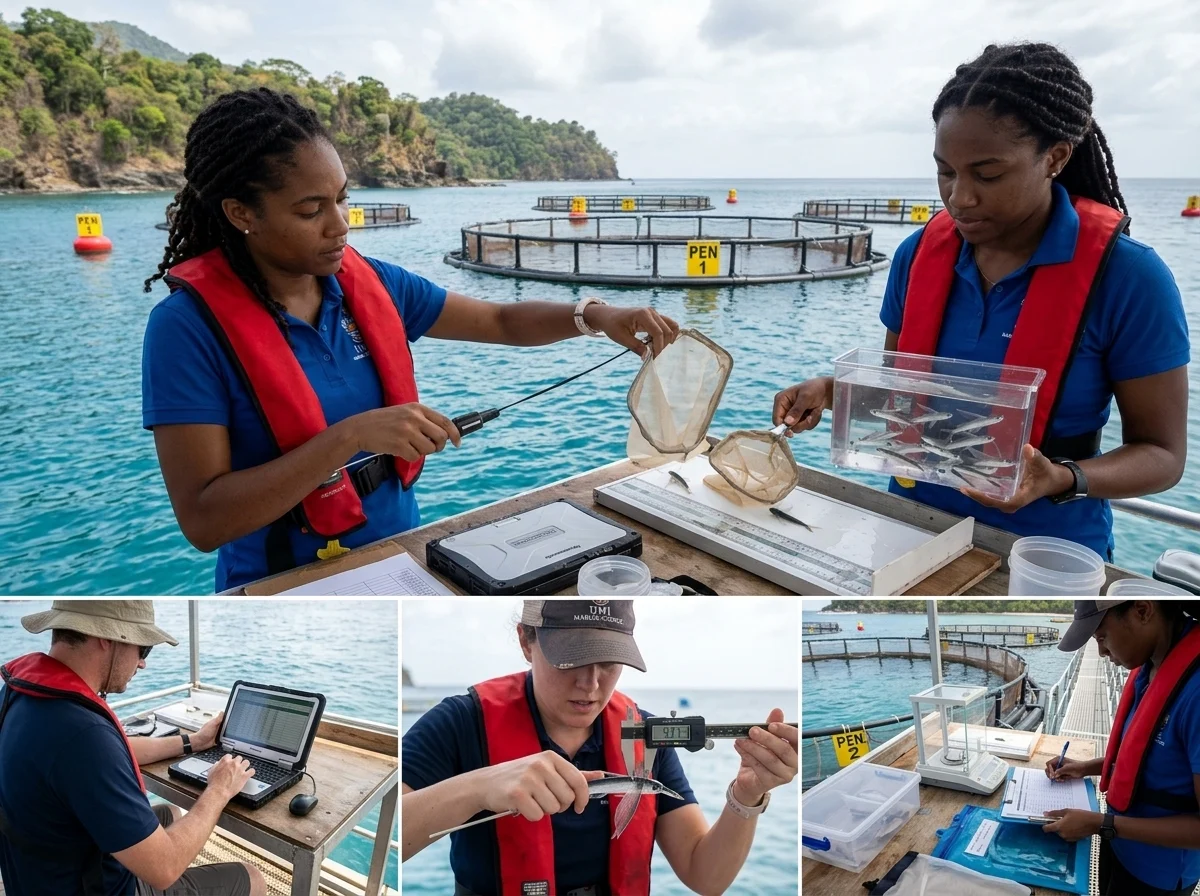
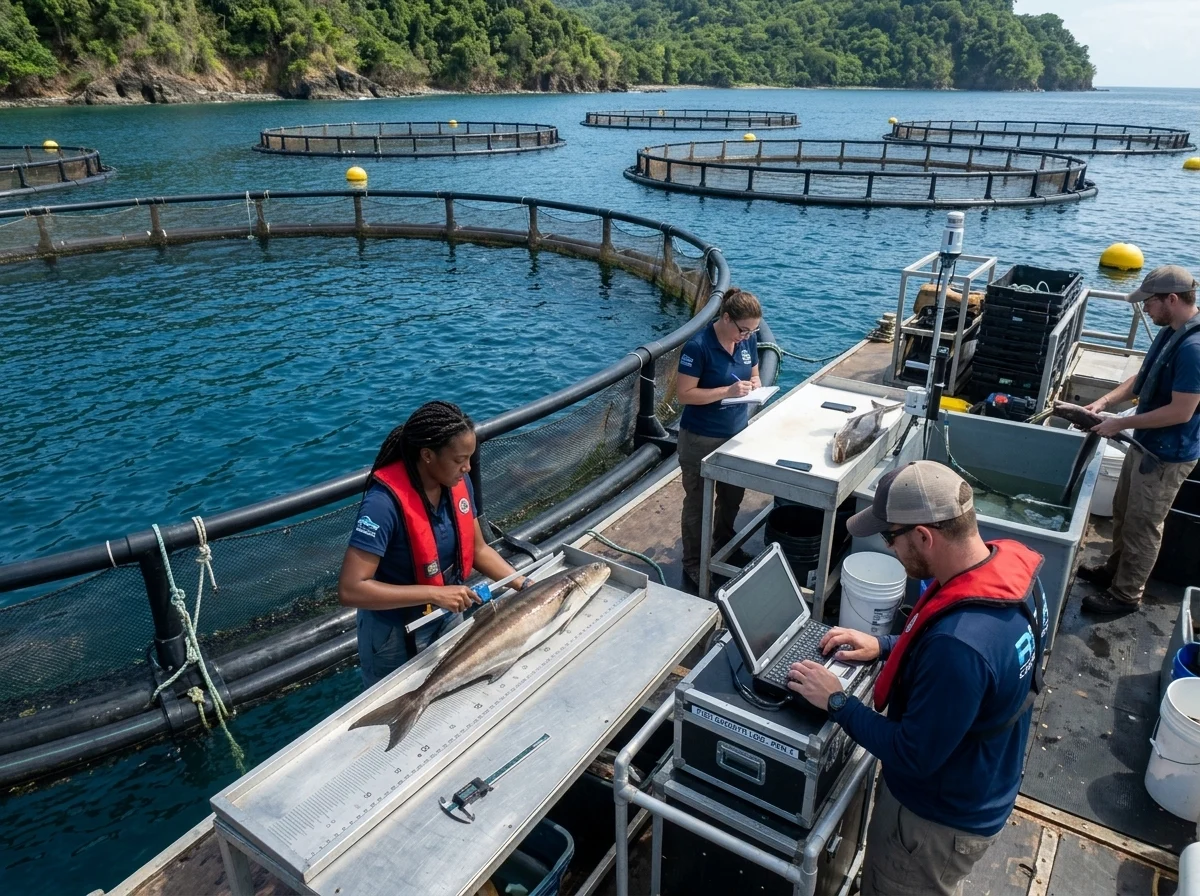
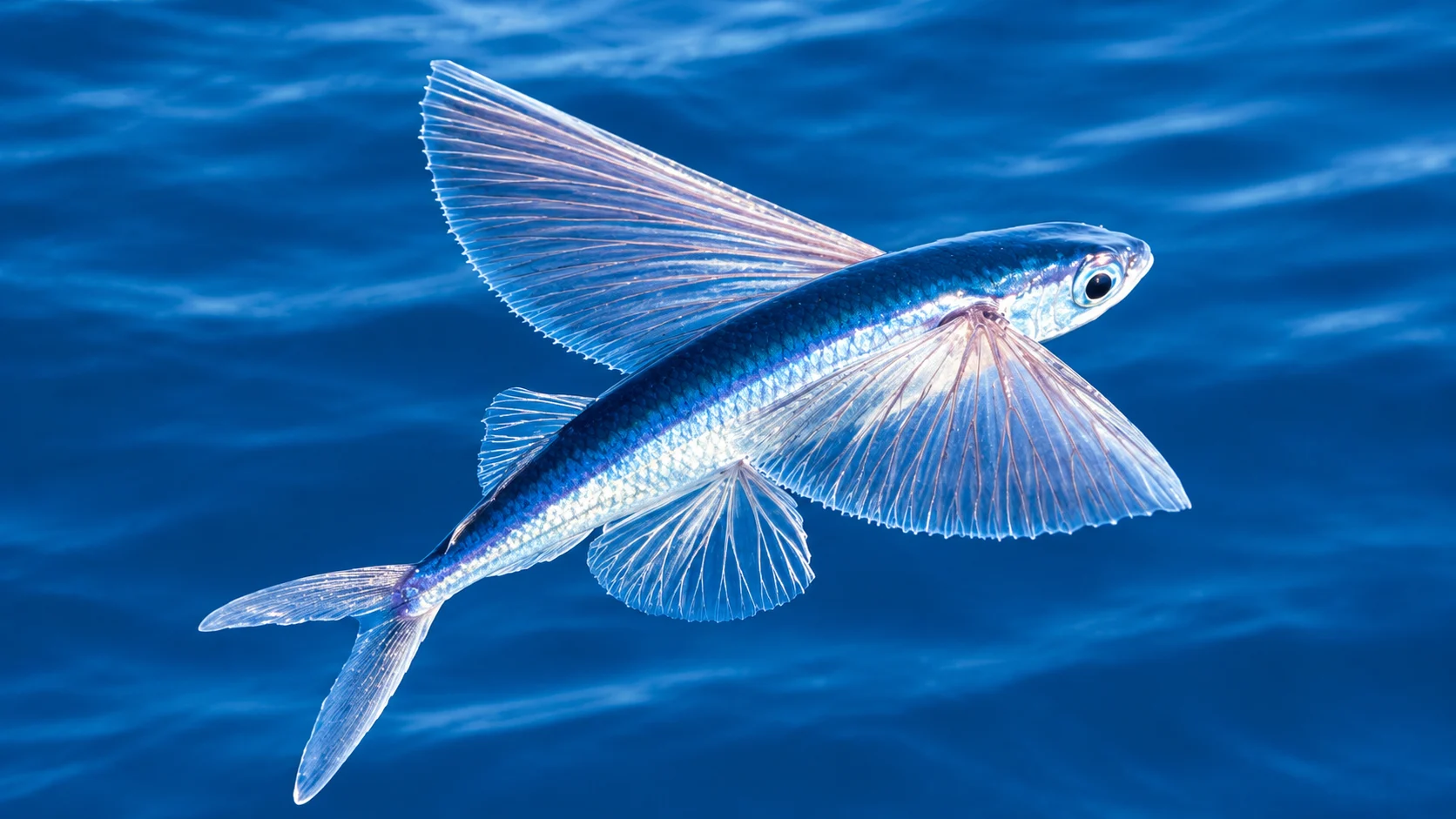
Those seventy days at sea are open science. Student exchange programmes run through the pens and the lab — and somewhere out there is the lucky biologist who makes this their PhD.

Monitoring & reporting
If we cannot measure it, we do not claim it. If it is measured, anyone can check it.
How we quantify success
Six instruments, one time-series
The programme’s success is defined by the first stock time-series ever produced for Tobago — spawning activity, juvenile recruitment, catch per trip. Six instruments build it.
In progress
Fishermen’s GPS & the heat map
Registered fishermen log GPS positions before and after every trip, and at every egg sighting. Together the tracks build a live heat map of flying fish activity across Tobago’s waters — the first ever made.
From first release
Tagged fish
A share of every released cohort is tagged. Recaptures reported at the landing sites tell us survival, growth and how far our fish range — the same method that identified Tobago as the stock’s spawning ground in 1994.
Funding dependent
Sonar network
Acoustic monitoring stations that count schools passing through Tobago’s near waters, day and night, independent of anyone fishing. Comes online when Phase 1 funding lands.
On every pen
Pen & hatchery telemetry
Dissolved-oxygen sensors on every pen and continuous water-quality logging in the hatchery. Survival rates are recorded at every rearing stage, not reconstructed afterwards.
Every release
Witnessed release counts
Every release is counted before independent witnesses and published the same day. The number on the record is the number in the water.
In development
AI hotspot analysis
Machine learning over the GPS record finds where fish consistently gather — and flows back to fishermen as hotspot guidance before they leave the dock.
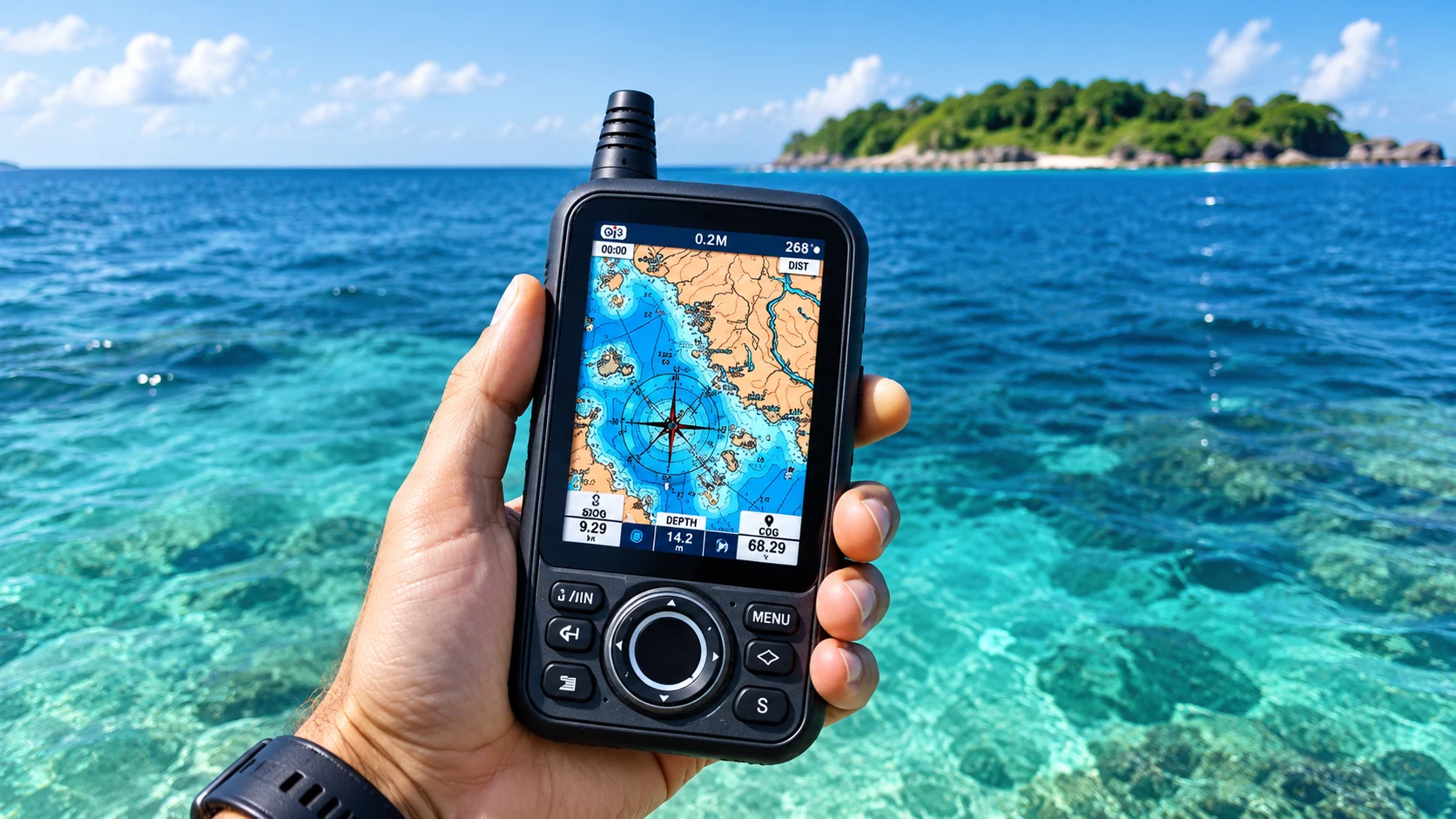
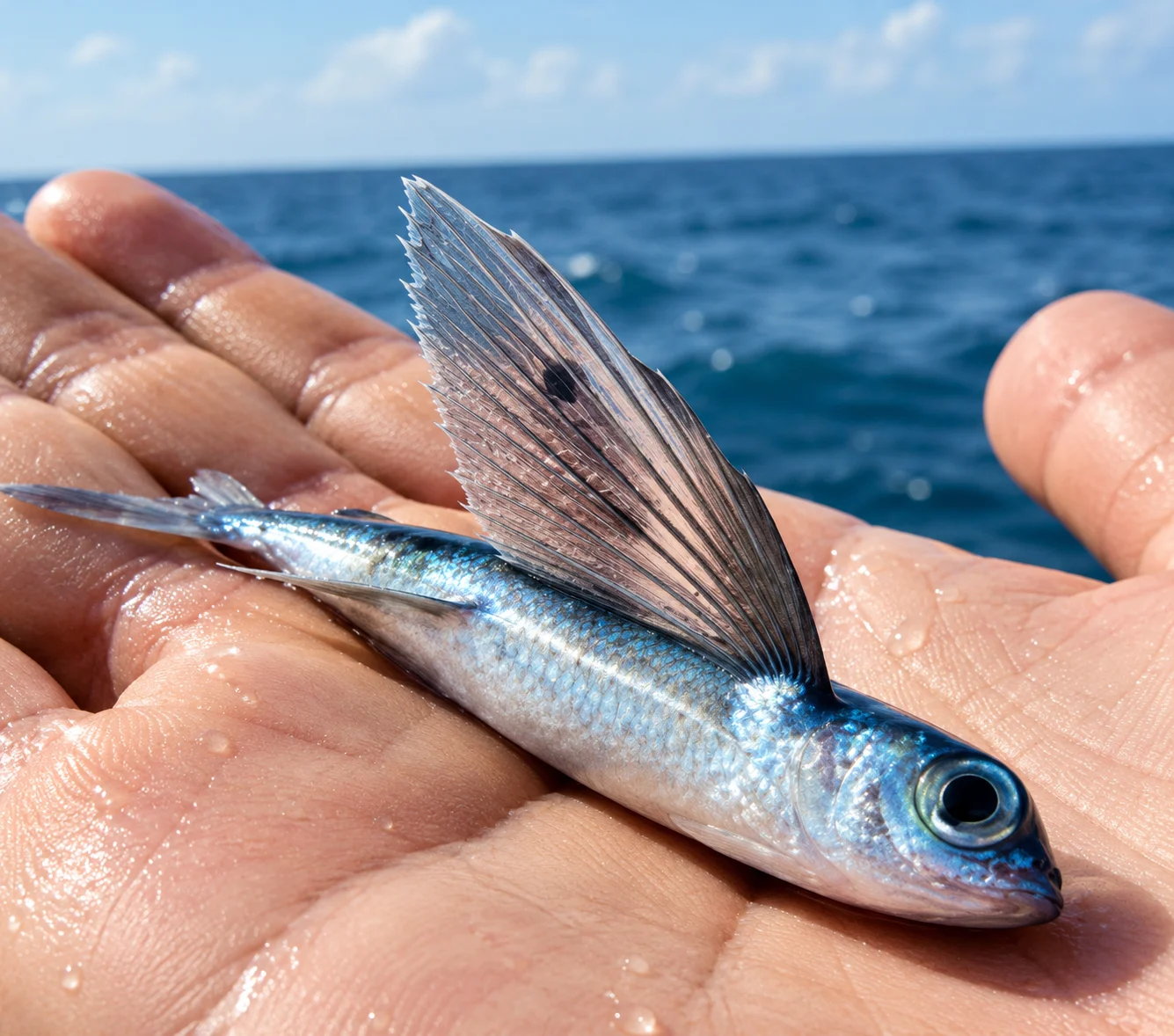
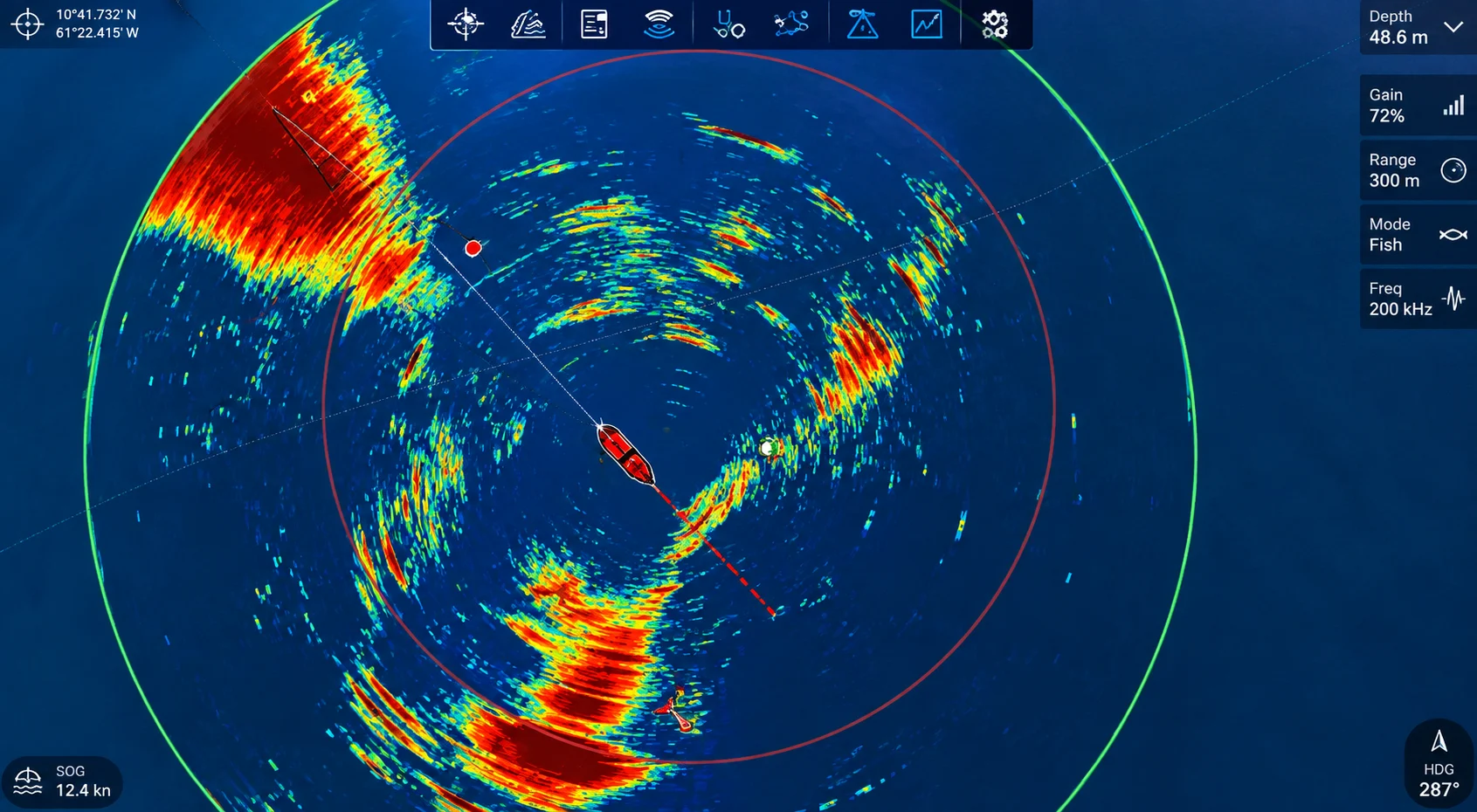
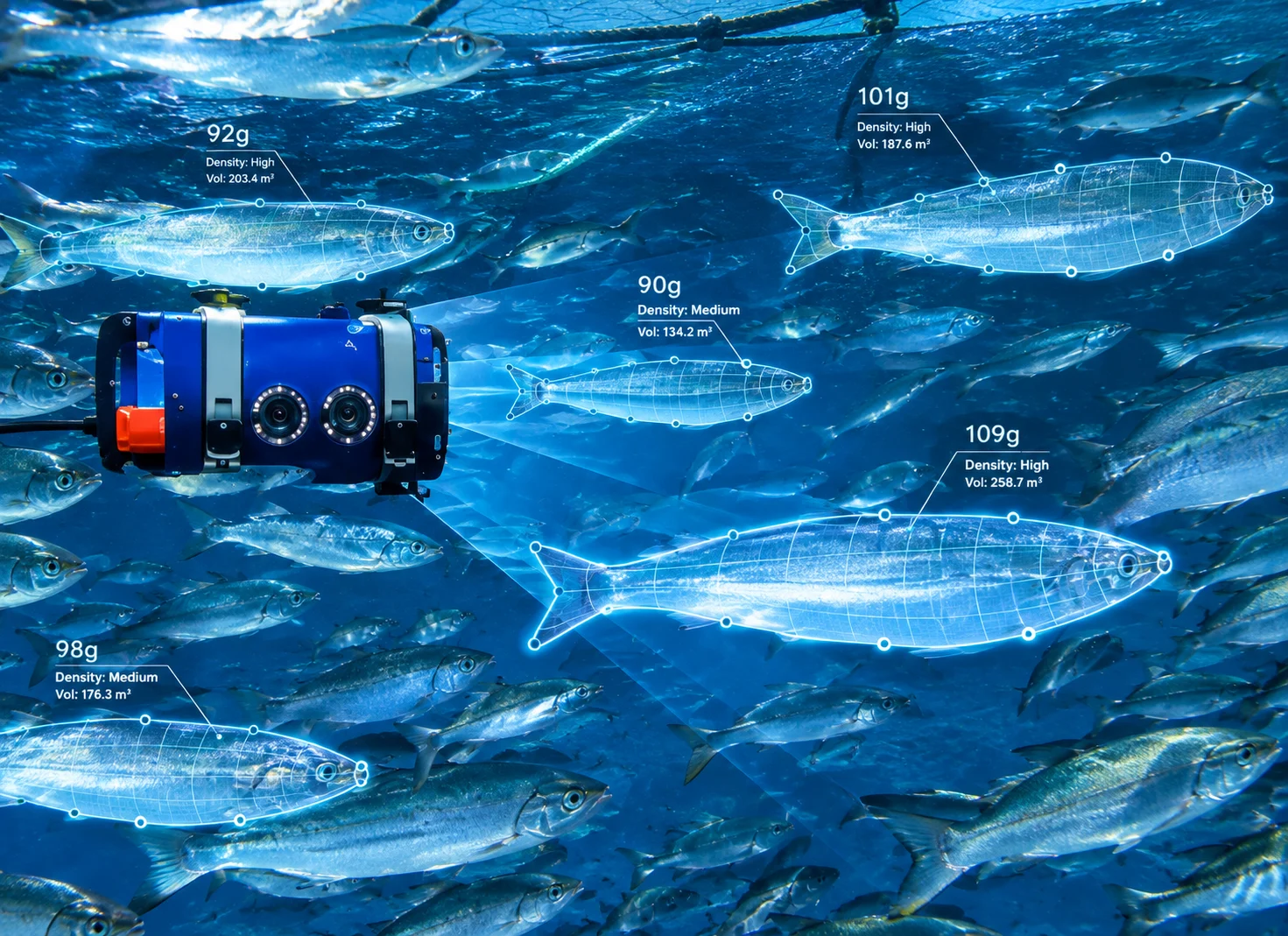
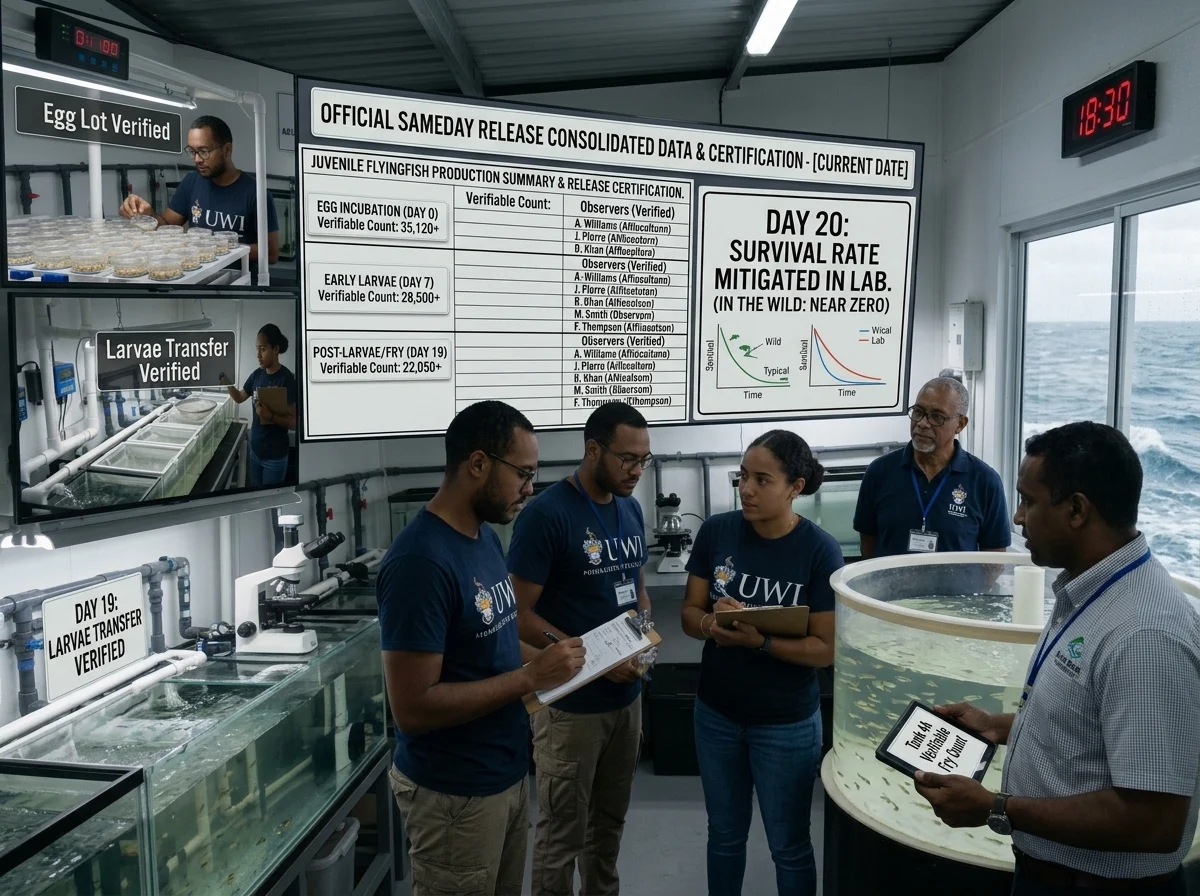
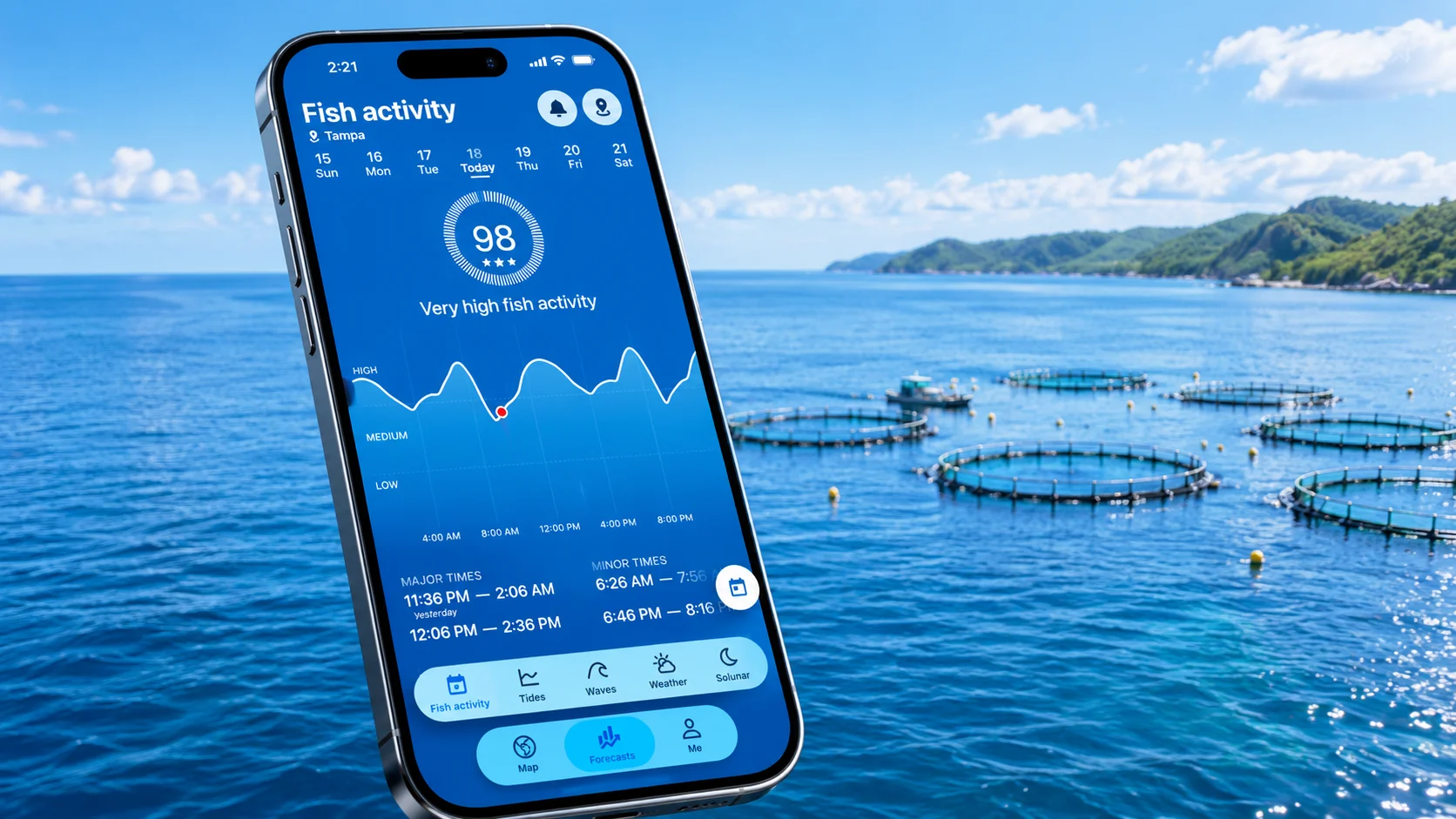
Anyone can check us — the THA, a funder, a fisher, you.
Radical transparency
Reporting
Published, not summarised
What the instruments measure goes on the record in three ways, none of them curated by us. This is what lets a funder commit for the long term — the evidence never depends on taking our word.
The live dashboard
Budgets, expenditure, survival rates and release records, visible to the THA, funders and the public in real time — the actual live record, not a report about it.
Data to the CRFM
The stock time-series is formally submitted to the Caribbean Regional Fisheries Mechanism, where seventeen member states manage this fishery together. If fishing effort rises past safe thresholds, the data triggers a management response.
Independent annual audit
A financial audit and a biological audit, both independent, both published in full every year. The biological audit is held to peer-review standard — the same evidence that qualifies international grant applications.

Five UN Sustainable Development Goals
What happens in ninety days off Black Rock counts toward goals the whole world has signed.
Global impact
One programme, five of the world’s goals
FFINS delivers measurably against five United Nations Sustainable Development Goals — SDG 14 Life below water, SDG 2 Zero hunger, SDG 8 Decent work and economic growth, SDG 13 Climate action and SDG 1 No poverty — not as a claim, but as counted fish, paid salaries and published data.

Sustainable Development Goal 14: Life below water
Conserve and sustainably use the ocean and its resources. FFINS delivers verified stock enhancement of Hirundichthys affinis — rebuilding the base of the food web in Tobago waters, with every release counted and published.




First a fishery restored. Then a methodology the whole Caribbean can adopt.
Proof travels
Beyond Tobago
A model built to travel
The programme is designed as a repeatable unit — a container-scale hatchery, community-kept pens, an engineered FAD network and a verification layer. Prove it once in Tobago, and the same unit can be stood up in any small island developing state where flying fish spawn.
That is what Tobago’s proof of concept actually buys: not one restored fishery, but a documented, costed, independently verified methodology the whole region can adopt — a working blue-economy instrument for CARICOM, the CRFM’s seventeen member states, the GEF and every funder who backs replication over one-off projects.
Modular
Hatchery, pens, FADs and monitoring are standard units. A site adds capacity by adding modules, not by redesigning the programme.
Affordable
Container-scale infrastructure and local labour keep the entry cost within reach of a single national grant — no ship, no port, no imported workforce.
Proveable
Every claim is quantified — witnessed counts, telemetry, tagged recaptures — and audited to peer-review standard. The next site inherits the evidence, not just the idea.
Transferable
Once the methodology is proven, standing up a new site is training and modules — protocols, monitoring and reporting come as a package, ready for any SIDS.

Where we are
Proof of concept is approved and open to funding. Phase 1 is waiting on partners.
Two stages
Proof of concept, then Phase 1
Open to funding
Proof of concept
Approved by the THA and ready to build: a container hatchery, six pens, and the first verified releases in Tobago’s own waters — open to funding partners now. The same ninety-day cycle described above runs start to finish, with the first release publicly witnessed and counted — the proof the whole model rests on.
Seeking partners
Phase 1
A full hatchery facility, twelve pens, a research vessel, and dozens of paid Tobagonian positions. This is where the six monitoring instruments come online in full and the programme becomes the repeatable unit described above — ready, eventually, to travel beyond Tobago.
An offset planted an ocean away restores nothing here. This one puts fish back in the water your operations sit on.
For the energy sector
For the energy sector
You work this water. Help us restock it.
For the companies that operate in and around Tobago’s waters, FFINS is the one CSR partnership that restores the exact resource their operations share — witnessed, audited and published live.
See it happening in real time
Egg counts, releases and FAD status, published as they happen.
Open the live data